Why Is My Heater Running Constantly in Winter?
Long run times in a cold snap are often normal, but a few signs say the system needs a closer look.
September 30, 2026 · 4 min read
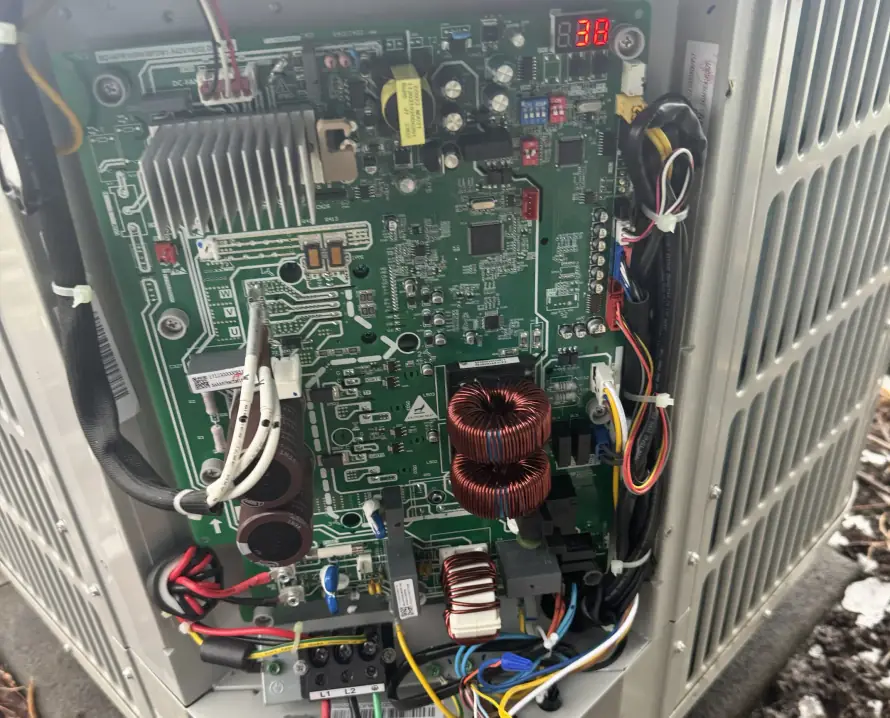
You wake up, the house is warm, and you can hear the heater running. You come home from work, still running. You go to bed, and it is still running. It is natural to start wondering whether something is wrong, or whether this is going to show up in the next power bill.
The honest answer is that it depends. A heater that runs for long stretches in a cold snap is often doing exactly its job. But a heater that never shuts off and never quite catches up is telling you something. This guide will help you tell the two apart.
When long run times are normal
Your house loses heat to the outdoors all the time, through windows, walls, the attic, and every small gap. When the temperature outside drops and stays low, the house loses heat faster, and the heater needs more time to replace it. On a cold night, or across a cold few days, long cycles are expected. In that situation the system may rarely cycle off for long.
It is likely normal if the house reaches the temperature you set, the air coming out of the vents feels steadily warm, the heater does shut off now and then even if the breaks are short, and the comfort is even from room to room. A system that is working hard and winning is not a system with a problem.
Signs it may be more than a cold snap
- The heater never shuts off at all, even on a moderate day.
- The house cannot reach the temperature on the thermostat.
- The air from the vents is lukewarm or cool.
- Some rooms are warm and others stay noticeably cold.
- Your energy bill jumped and the weather does not explain it.
- New sounds, such as rattling, buzzing, or grinding.
The usual suspects, in the order to check them
Start with the cheap, easy things. They account for a lot of cases.
- The air filter. Filters clog faster in winter, when the system runs more. A packed filter restricts airflow, so the heater runs longer to move the same amount of warmth. Replace it if it looks gray.
- The thermostat. Make sure it is set to auto and not to on. When the fan is set to on, air circulates all the time, which can feel like the system never rests. Check the batteries too if the display is dim.
- Large setbacks. Dropping the temperature many degrees overnight and then asking the system to climb back in the morning forces a long, hard recovery. A steadier setting usually means shorter, more even cycles.
- Vents and registers. Furniture pushed against a register, or a closed vent in an unused room, can throw off airflow through the whole house.
- The house itself. Gaps around doors and windows, thin attic insulation, and drafty rooms make the heater run longer. That is not a heater problem, but it shows up as one.
Equipment causes worth knowing about
If the basics check out and the heater is still running without end, the cause may be inside the equipment. An older system loses capacity over time and can fall behind in a cold spell. A system that was too small for the house to begin with will run nearly nonstop trying to keep up. A failing component, such as a weak blower motor, a control board problem, or a heat pump that has trouble in cold weather, can leave a system running but not delivering. These are not guesses to make from the living room, and they are not things to open up and poke at yourself.
One more thing for heat pump owners. A heat pump will often run for long stretches in cold weather, because it heats by moving warmth from outside air rather than creating it. During a deep cold snap it may call on backup electric heat. That is normal operation. But if backup heat seems to be running constantly on mild days, or the air from the vents never feels warm, that is worth having looked at.
A mid-winter checklist you can do in ten minutes
- Replace or clean the air filter if it looks dirty.
- Confirm the thermostat is on auto and holding a steady temperature.
- Check the thermostat batteries.
- Make sure every vent and register is open and clear.
- Listen for new noises.
- Take note of which rooms feel colder than the rest.
When to call
If you have changed the filter, confirmed the thermostat, and the heater still runs without catching up, a professional visit is the next step. Do not wait if the air is cold, the house is dropping in temperature, or you smell anything burning or like gas. Turn the system off and call right away. For anything with a gas smell, leave the house and call your gas utility or 911 from outside.
For a heater that runs but struggles, there is no reason to wait for it to fail completely. Small problems found in January are usually modest repairs. The same problem found on the coldest night of the year is a bigger one, and everyone's schedule is full.
When AirCare comes out, you get the findings in plain language along with what it would take to fix, and the estimate is reviewed with you before any work begins. Most repairs are completed during the same visit, and if a part has to be ordered, you find out that day. Read more about our service at /services/heating-repair, or call the 24/7 line at (509) 579-9979.
AirCare Heating & Cooling, (509) 579-9979
Call (509) 579-9979More articles
Heat Pump vs Central Air in the Tri-Cities: Which One Fits Your House?
Both cool your home the same way in July, so the real decision is what you want from the system in January.
Ductless Mini-Split vs Central Air: How to Choose for Your Home
The equipment matters less than the shape of your house, and the condition of the ductwork inside it.