Ductless Mini-Split vs Central Air: How to Choose for Your Home
The equipment matters less than the shape of your house, and the condition of the ductwork inside it.
September 30, 2026 · 4 min read
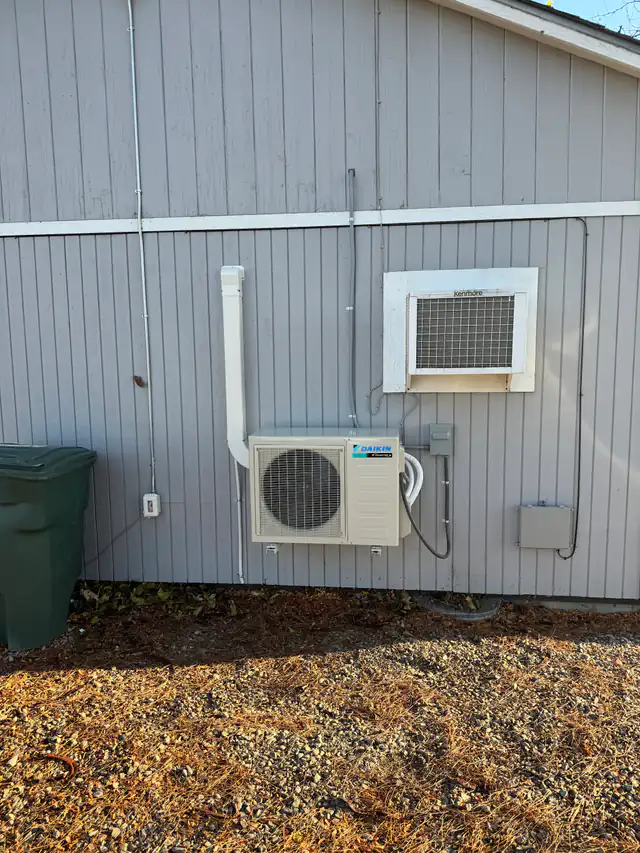
Every summer, the same few complaints come in. The bedroom that never cools down. The bonus room over the garage that feels like a sauna. The addition that was never connected to the rest of the house's cooling. If any of that sounds familiar, you have probably started wondering whether a ductless mini-split is the answer, or whether central air is still the right call.
Both systems cool a house well. They just do it differently, cost differently, and suit different homes. Here is how to think about the choice without a sales pitch.
How central air works
Central air puts the cooling equipment in one place, an outdoor condenser plus an indoor coil and blower, and sends the cooled air through a network of ducts to vents in every room. One thermostat decides the temperature for the whole house. When the ducts are in good shape and the layout suits them, it is a simple and tidy setup, and the only thing you see inside is the vents.
The weakness is the ductwork itself. Ducts can leak, collapse, run through a hot attic with thin insulation, or simply never reach the room you care about. Because one thermostat sets one temperature, fixing a warm back bedroom often means overcooling the rest of the house.
How a ductless mini-split works
A mini-split has a small outdoor unit connected by a slim line set to one or more indoor units mounted on the wall. No ducts. Each indoor unit conditions the room it is in and has its own temperature setting. Most mini-splits can also heat, so a single system can serve as both your cooling and a source of heat for that room.
That makes them a natural fit for places ducts do not reach: additions, converted garages, finished basements, older homes that never had ductwork, or one stubborn room that never matches the rest of the house. The trade-off is that the indoor units are visible on the wall, and cooling a whole house takes multiple indoor units.
What each tends to cost
These are AirCare's own published ranges, offered as guidance and not as quotes.
- Central air: roughly $3,500 to $9,500 installed when the existing ductwork is sound. Adding or replacing ducts can push a project past $15,000.
- Ductless, single zone: roughly $2,000 to $6,000.
- Ductless, whole-home multi-zone: typically $6,500 to $15,000 or more, depending on how many indoor units you want.
Notice what moves those numbers. For central air it is the ductwork. For ductless it is the number of rooms you want to serve. A house with good ducts is usually cheaper to cool with central air. A house with no ducts, or ducts in bad shape, flips that math quickly, because the most expensive part of a central air job is building or repairing the duct system.
When central air makes the most sense
- Your ducts are already in place, reasonably sealed, and still doing their job.
- You want even cooling in every room from a single thermostat.
- You are replacing an existing central system and do not want to change how the house is set up.
- You would rather put the budget into the equipment than into room-by-room units.
When a mini-split makes the most sense
- Your home has no ductwork, or the ducts you have are in poor condition.
- You are adding a room, finishing a basement, or converting a garage.
- One or two rooms run much warmer than the rest and you want to fix just those.
- You would like different rooms to hold different temperatures.
Plenty of houses end up with both
This is more common than people expect. Central air handles the main living area, and a single-zone mini-split covers the room the ducts never reached. In a house that has been added onto over the years, that pairing is often cheaper than extending ductwork into a space that was never designed for it, and it solves the problem without disturbing the rest of the system.
Sizing is where jobs go wrong
With either system, size matters more than most buyers realize. Equipment that is too small never keeps up on the hottest afternoons. Equipment that is too large cools the air so fast that it shuts off before it pulls the moisture out, then cycles on and off and wears itself out early. A proper job starts with a look at the actual house: the rooms, the windows, the insulation, and the ducts if there are any. Be wary of any quote that was built from square footage alone.
What to ask before you choose
- Can you show me the condition of my ducts, or tell me what you found?
- Which rooms are you planning to serve, and why those rooms?
- What would it look like to do the main house with central air and one problem room with a mini-split?
- Where will the indoor and outdoor units go, and how will the lines run?
At AirCare, findings and the estimate are reviewed with you before any work starts, and if there is more than one reasonable path, you hear all of them, including the one that costs less. That matters most on a decision like this one, where the right answer depends on what is inside your walls.
To see how we approach this kind of job, read more at /services/ductless-mini-splits. If you want someone to look at your house and talk it through, call the 24/7 line at (509) 579-9979.
AirCare Heating & Cooling, (509) 579-9979
Call (509) 579-9979More articles
Heat Pump vs Central Air in the Tri-Cities: Which One Fits Your House?
Both cool your home the same way in July, so the real decision is what you want from the system in January.
What to Do When Your AC Stops Working in a Heat Wave
A few minutes of checking can save a service call, and a few warning signs mean you should stop checking and pick up the phone.