Heating · Tri-Cities
Furnace repair in Richland, WA
Fan motors, igniters, flame sensors and limit switches on gas furnaces, found with a meter and explained before any work starts. When the heat goes out, the 24/7 line at (509) 579-9979 is answered.
Chapter 01
Four parts behind most no-heat calls
A gas furnace has a short list of parts that decide whether you get heat: the fan motor that moves the air, the igniter that lights the burners, the flame sensor that confirms they lit, and the limit switch that shuts everything down if the furnace runs too hot. When a Richland furnace quits on a cold night, the cause is usually one of those four, or the control board that listens to them.
Take the fan motor. One Tri-Cities homeowner, T.L., wrote that Cameron was at the house about an hour and a half after the call and that “He found that the fan motor was bad and it was overheating the furnace.” That chain is the point. A weak motor moves less air, the heat exchanger runs hot, and the limit switch trips to protect the furnace. Replacing only the limit switch would have fixed nothing, and the furnace would have been back on the same cycle within days.
Igniters and flame sensors fail in a different way. An igniter cracks with age. A flame sensor gets coated with a thin film that blocks its signal, so the furnace lights, then shuts itself off a few seconds later. A sensor can sometimes be cleaned and an igniter has to be replaced. Either way, you get the findings in plain language, and the estimate is reviewed with you before work begins.
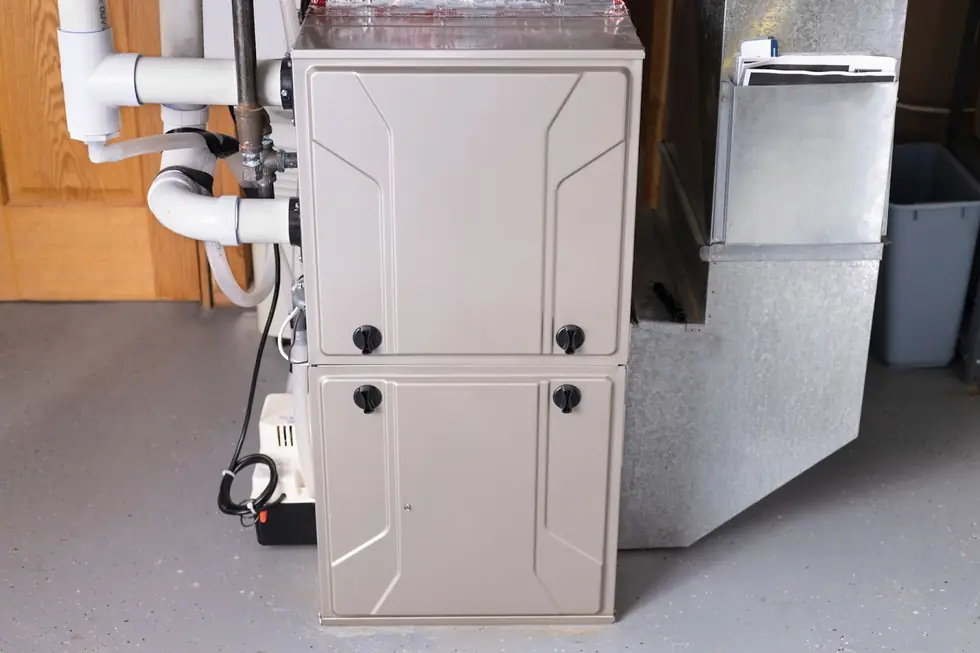
Gas furnace with white PVC venting installed in a garage
Carbon monoxide and gas safety come before the repair
Before any part gets swapped, the furnace has to be safe to run. A cracked heat exchanger, a blocked flue or a venting problem can put carbon monoxide into the house, and you cannot smell it. If a carbon monoxide alarm sounds, get everyone outside and call 911 first. Call AirCare once the house is clear and the fire department says it is safe to go back in.
If you smell gas, do not flip a switch, do not use the phone inside, and do not hunt for the source. Leave the house and call the gas utility from outside. For everything short of that, the furnace gets looked at the same way every time: safety controls tested, venting and flue checked, then the failed part. A furnace that short cycles, soots up, or sounds different than it did last winter is telling you something about combustion and airflow, and those calls are never treated as a quick part swap.
AirCare is licensed, bonded and insured, WA L&I licence AIRCAHC759DC. Trevor Nelson still runs service calls himself, often with his brother Cameron, so the person who finds the problem is the person who explains it.
Chapter 03
Repair or replace: the honest math on an older furnace
Repair when one part failed on a healthy furnace. Replace when repairs keep stacking up on an old one.
As a rule of thumb, a furnace that is 15 years old or more, that has a leak or a cracked heat exchanger, or that is staring at a repair bill creeping toward half the cost of a new unit, deserves a hard look at replacement. If there is more than one reasonable path, you hear all of them, including the one that costs less. Nothing gets done that you did not approve.
Most repairs are completed during the same visit. When a part has to be ordered, you find out that day rather than after a week of silence. If it turns out the furnace is at the end of the road, the furnace installation team can quote the change-out from the same visit. Call (509) 579-9979, any hour.
AirCare Heating & Cooling, Richland, WA. Licensed, bonded and insured, WA L&I AIRCAHC759DC. Furnace down? Call the 24/7 line at (509) 579-9979.