Heat Pump vs Central Air in the Tri-Cities: Which One Fits Your House?
Both cool your home the same way in July, so the real decision is what you want from the system in January.
September 30, 2026 · 4 min read
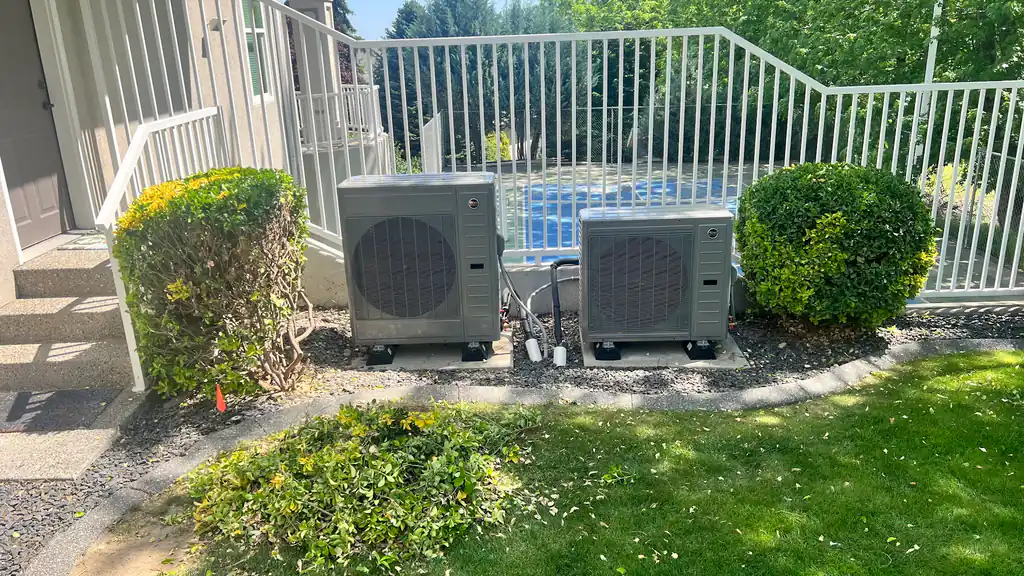
If your air conditioner is on its last summer, you have probably heard two answers from two different people. One says put in a heat pump. The other says replace the AC and keep the furnace. Both can be right.
Here in the Tri-Cities the summers are hot and dry and the winters get properly cold, so whatever you install has to carry both ends of the year. This guide walks through how the two options actually differ, what they tend to cost, and which kind of home each one suits.
What a heat pump does that central air does not
A heat pump is an air conditioner that can run backward. In summer it pulls heat out of your indoor air and dumps it outside. In winter it reverses the cycle and pulls heat from the outdoor air into your house. It moves heat instead of burning something to make it, which is why one outdoor unit and one indoor air handler can handle both seasons.
Central air conditioning uses the same refrigerant cycle but only in one direction. It cools, and that is all it does. Your winter heat has to come from somewhere else, usually a gas furnace or electric heat strips in the air handler. So the real question is not which one cools better, because in summer they are nearly identical. The question is what you want doing the heating.
What each one tends to cost
These are AirCare's own published ranges. They are guidance, not quotes, and your actual number depends on the house.
- Heat pump installation in the Tri-Cities typically runs $5,000 to $12,000.
- Central air runs roughly $3,500 to $9,500 installed when the existing ductwork is sound.
- Adding or replacing ducts can push a central air project past $15,000.
It is tempting to look at those numbers and call central air the cheaper option. Be careful with that comparison. A heat pump replaces your cooling and your heating in one purchase. If your furnace is also near the end of its life, you are really comparing a heat pump against a new AC plus a new furnace, and that math often looks very different. If your furnace is young and healthy, replacing only the AC side is usually the lower-cost move.
How each one handles a Tri-Cities year
In summer, honestly, you will not feel a difference. Both systems cool the house the same way, and both work hard through a long hot stretch. Where they separate is winter.
A heat pump does its best work in the mild and moderate cold that makes up much of our winter, and it carries the house on its own most days. During a hard cold snap many heat pump systems lean on backup electric heat to keep up, which costs more to run. A gas furnace, by contrast, delivers steady strong heat no matter how long the cold lasts. If you already heat with gas and your furnace is in good shape, that is a real point in favor of keeping it.
When a heat pump is usually the better fit
- You are replacing the furnace and the air conditioner at the same time and want one system instead of two.
- Your home heats with electricity today, whether through baseboards, an old electric furnace, or resistance strips, and you want to cut how much power it takes.
- You do not have gas service at the house.
When central air with a furnace usually wins
- You have a solid gas furnace with years left and only the cooling side has failed.
- You want the steadiest possible heat through a long hard freeze.
Check your ductwork before you decide anything
Whichever way you lean, both options usually push air through the same ducts. If those ducts are leaky, undersized, or crushed in the attic, the best equipment in the world will feel mediocre. This is the part of the quote that moves the price the most, and it is the part people forget to ask about. A good estimate looks at the ducts, not just the box outside. Ask whoever is quoting your job what they found in the ductwork and what it would take to fix.
Questions worth asking before you sign
- What are you recommending, and what is the second-best option for my house?
- What is the condition of my existing ducts, and is any of that work in the price?
- How was the system sized, and did anyone look at the actual house instead of the square footage?
- What does backup heat look like, and what will it cost me on the coldest nights?
Maintenance is part of the decision
A heat pump runs in both seasons, so it works more hours than an air conditioner that sleeps all winter. That is not a reason to avoid one. It is a reason to keep it serviced, with a visit in spring and another in fall. AirCare's own guidance is that a routine maintenance visit typically falls between $100 and $200, and AirCare offers maintenance plans for homeowners who would rather have those visits scheduled for them than remember to book them.
If you are still on the fence, the most useful next step is a technician looking at what you already have: the equipment, the ducts, and how you heat now. At AirCare the owner still runs service calls, so the person talking through your options is usually the person who would do the work. You can read more on our heat pump page at /services/heat-pumps, or call the 24/7 line at (509) 579-9979 and talk it through.
AirCare Heating & Cooling, (509) 579-9979
Call (509) 579-9979More articles
Ductless Mini-Split vs Central Air: How to Choose for Your Home
The equipment matters less than the shape of your house, and the condition of the ductwork inside it.
What to Do When Your AC Stops Working in a Heat Wave
A few minutes of checking can save a service call, and a few warning signs mean you should stop checking and pick up the phone.