Comfort · Tri-Cities
Gas fireplace repair and tune-up in Richland, WA
Pilots, thermocouples, igniters and dirty burners, cleaned, tested and explained. If you smell gas, leave the house and call the gas utility first, then call us.
Chapter 01
Why a gas fireplace stops lighting
Most gas fireplace calls trace back to a short list: a pilot that will not stay lit, a thermocouple or thermopile that no longer proves the flame to the gas valve, an electronic igniter that clicks without lighting, or a burner and log set so dusty and sooty that the flame cannot spread the way it should.
A pilot that lights while you hold the button and dies when you let go usually points to a thermocouple or a dirty pilot assembly, not a gas supply problem. On millivolt systems the thermopile powers the gas valve, and when one weakens the fireplace may light and then fade. The valve, the wall switch and the remote or thermostat that calls for heat are all on the checklist, because the failed part is not always the obvious one.
Logs that have shifted can push flame against the pilot or a sensor. The log set is arranged to a pattern for a reason, and what looks like a cosmetic problem can change how the flame behaves.
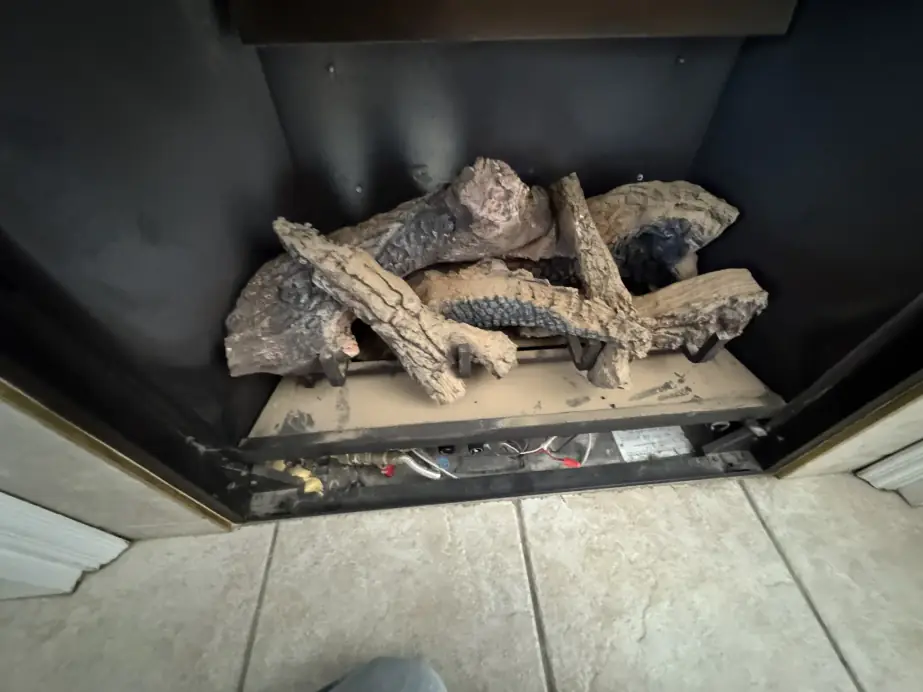
Gas fireplace with the front removed, log set and burner exposed for service
The annual tune-up: clean, inspect, test
A gas fireplace that works fine today still collects dust, pet hair and soot that quietly change how it burns. A tune-up means the front comes off and the logs come out. The burner, pilot assembly, igniter and thermocouple are cleaned, inspected and tested, and the glass is cleaned and its seal looked at.
Then the fireplace is run through a full cycle to confirm it lights, holds the flame and shuts off the way it should. If something is wearing out, you hear about it while it is a small, planned repair, not on the first cold night.
Once a year, ideally before heating season begins, is the right rhythm for Richland homes. A tune-up and a repair are different visits, and a technician can tell which one your fireplace needs from how it is actually behaving.
Chapter 03
Gas fireplace safety: what to do and when to call
If you smell gas, leave the house and call the gas utility from outside. Do not light anything and do not flip a switch.
Soot on the glass or walls, a flame that has changed from how it used to look, or a smell in the room all call for a service visit. A gas fireplace burns indoors, so carbon monoxide matters here the same way it does with a furnace, and a working carbon monoxide alarm in the room is worth having. A cracked or loose glass front or a worn seal should be looked at before the fireplace is used again.
Anthony F. wrote: “Trevor was great. He showed right up, found the problem, and fixed it. He was honest and very helpful.” Jaymee E. wrote: “The owner is so kind and worked his tail off to figure out what our problem was.” Call (509) 579-9979 to book a repair or tune-up.
AirCare Heating & Cooling, Richland, WA. Licensed, bonded and insured, WA L&I AIRCAHC759DC. Fireplace repair or tune-up: call (509) 579-9979.