What to Do When Your AC Stops Working in a Heat Wave
A few minutes of checking can save a service call, and a few warning signs mean you should stop checking and pick up the phone.
September 30, 2026 · 4 min read
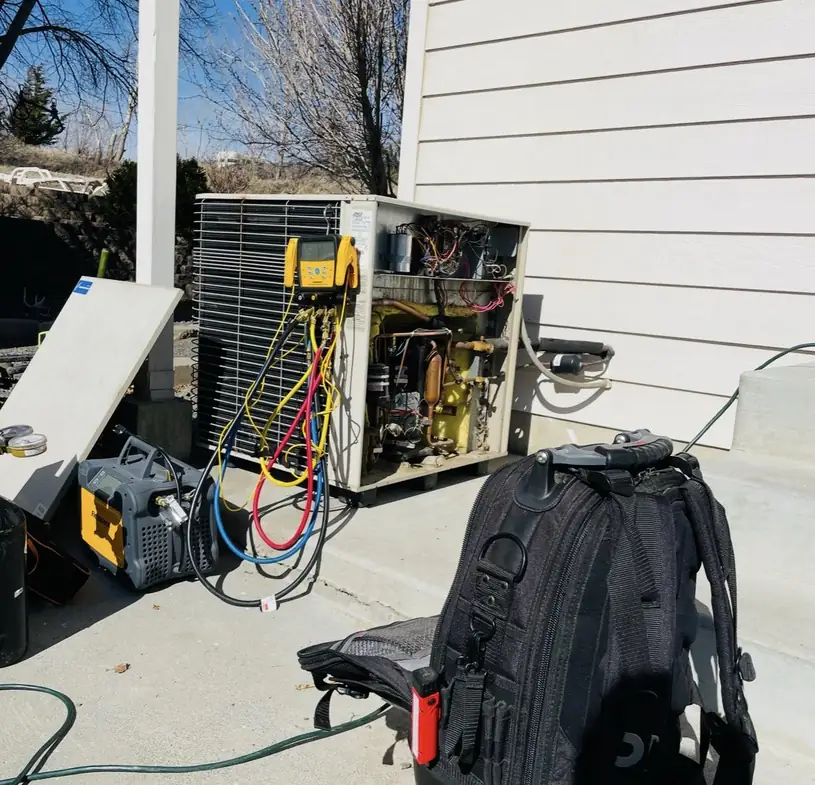
It is a hot afternoon, the house is getting warmer, and the air coming out of the vents has gone from cool to nothing. The first reaction is usually a small wave of panic. The second is to wonder how much this is going to cost.
Take a breath. Sometimes a dead air conditioner is a big repair, and sometimes it is something you can fix in two minutes. This guide covers what to check first, what the warning signs look like, how to keep the house livable while you wait, and when to stop troubleshooting and call someone.
Why air conditioners quit on the hottest days
During a heat wave your system runs for hours with almost no break. That nonstop load finds every weak spot. A part that was worn but still limping along in June can finally give out on the first long hot stretch, which is why breakdowns tend to bunch up on the hottest days instead of spreading evenly through the summer.
Four checks that take about two minutes
- Thermostat: make sure it is set to cool, a few degrees below the room temperature. If the screen is blank, try fresh batteries.
- Breaker: look at the electrical panel for a tripped switch and reset it once. If it trips again right away, stop. That is an electrical problem, not a fluke.
- Air filter: if it is gray and packed with dust, swap in a clean one. A choked filter can starve the system of airflow and shut it down or freeze the coil.
- Outdoor unit: the condenser sheds your home's heat. Our dry, dusty climate packs it with dust, grass, and leaves, so clear a couple of feet around it and make sure the fan is not blocked.
If one of those was the culprit, you are probably back in business. If you checked all four and the system still will not start or only blows warm air, the problem is likely inside the system: a failed capacitor, a tired motor, low refrigerant, or something in the compressor circuit. Those are not homeowner fixes, and opening up the equipment yourself is not worth the risk.
Signs you should not wait
- The system is completely down and the house keeps climbing in temperature.
- You smell burning or something electrical. Turn the system off at the thermostat and the breaker, then call.
- The breaker trips again after one reset.
- Someone in the house is especially vulnerable to heat, such as an infant, an older adult, or a person with a heart or breathing condition.
- Ice has formed on the indoor coil or the refrigerant line. Turn the system off and let it thaw.
If your home is holding a tolerable temperature, the forecast is easing, and nobody is at risk, it is usually fine to book the next available visit instead of paying for an after-hours call. Judge that honestly. A warm evening with fans running is uncomfortable. A house that is climbing steadily with a person inside who is struggling is a different situation.
A note on heat illness
Heat exhaustion shows up as heavy sweating, weakness, nausea, and a headache, and it usually improves with rest, water, and a cooler space. Heat stroke is far more serious: confusion, hot dry skin, a rapid pulse, or fainting. That is a medical emergency, and the right call is 911, not an HVAC technician. Do not wait on the air conditioner if someone is in trouble.
How to keep the house livable while you wait
- Close blinds and curtains on any window getting direct sun, especially on the south and west sides. Much of a room's heat comes straight through the glass.
- Run fans where people are gathered. Fans do not lower the temperature, but moving air helps your body shed heat.
- If the evening air cools off, open windows on opposite sides of the house to pull a cross-breeze through.
- Hold off on the oven, the dryer, and anything else that adds heat.
- Pick one room, close it off, and make it the cool spot where everyone rides out the worst of the afternoon.
- Drink water steadily instead of waiting until you are thirsty, and use cool damp cloths on the neck, wrists, and forehead.
A few quick questions people ask
Is it normal for the house to struggle on the hottest days? Often, yes. An air conditioner can only cool a home so many degrees below the outdoor temperature, so on an extreme afternoon the indoor number may sit higher than you would like even when nothing is broken. Struggling to hit a low setting is not the same as failing, though it is worth watching.
Should I leave it running if it is blowing warm air? No. If the system runs but only pushes warm air, shut it off. Running it harder usually makes restricted airflow, a frozen coil, or a refrigerant problem worse, and you can turn a modest repair into a large one.
Cut the odds of a repeat
The most reliable way to avoid a breakdown in July is a tune-up in spring, before demand spikes. A technician checks the parts that tend to fail under heavy load, so small problems get caught early. Changing your filter on schedule and keeping the outdoor unit clear helps too, and it costs you almost nothing.
If you have worked through the checks and the house is still heating up, AirCare runs a 24/7 emergency line, and the owner still takes calls himself. Someone picks up. You can read about our emergency cooling service at /services/emergency-ac, or call (509) 579-9979 any hour of the day or night.
AirCare Heating & Cooling, (509) 579-9979
Call (509) 579-9979More articles
Heat Pump vs Central Air in the Tri-Cities: Which One Fits Your House?
Both cool your home the same way in July, so the real decision is what you want from the system in January.
Ductless Mini-Split vs Central Air: How to Choose for Your Home
The equipment matters less than the shape of your house, and the condition of the ductwork inside it.